
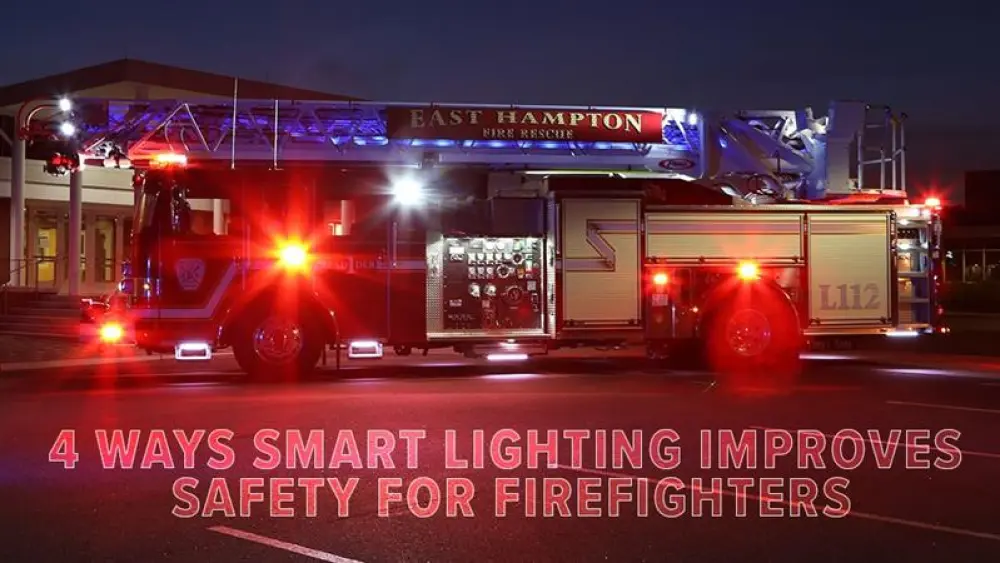
Firefighters work in unpredictable, high-risk environments every day - through smoke, darkness, chaotic traffic, severe weather, and fast-changing scenes. In these conditions, lighting isn’t just about visibility. It’s a primary safety system that supports decision-making, communication, and crew protection.
Here are four of the most important ways lighting keeps firefighters safer on every call.
1. Enhancing Visibility in Dangerous, Low-Visibility Environments
Visibility can deteriorate quickly at an active scene. Smoke, nighttime operations, fog, and weather all create situations where visibility - and being visible - directly affect safety.
High-performance warning lights help:
• Cut through dense smoke and harsh weather
• Provide long-range visibility to approaching vehicles or civilians
• Reduce the risk of struck-by incidents along roadways
• Illuminate building exteriors, access points, hydrants, and hazards
Full-size lightbars like our Freedom®IV play a critical role in these moments, delivering powerful, wide-angle warning light that remains visible through smoke, rain, fog, and darkness. Its high-output optics help approaching motorists recognize an emergency scene sooner, giving firefighters more space and time to work safely.
2. Providing Clear, Instant Communication at the Scene
Lighting has become one of the most effective forms of nonverbal communication at incident scenes. Warning lights like our M Series® support this communication by using purposeful color, pattern, and placement to define hazard zones, indicate vehicle orientation, and guide both firefighters and motorists. When used strategically around the apparatus, they help turn lighting into clear, intuitive direction rather than visual noise.
Technologies like Dynamic Variable Intensity (DVI®) and Vehicle-to-Vehicle (V2V) Synchronization strengthen these cues with smoother, more intuitive patterns across multiple apparatus. Instead of chaotic flashing, guided lighting directs attention exactly where it needs to go.
This “lighting-as-communication” approach reduces confusion during moments when decisions must be made instantly.
3. Improving Scene Visibility for Safer, Faster Operations
Once the apparatus is parked, firefighters rely on scene lighting to work safely and effectively.
High-quality scene lighting improves:
• Navigation-spotting obstacles, trip hazards, and structural issues
• Tool handling-reducing mistakes when making connections or grabbing equipment
• Search and rescue-illuminating entry points and exterior walls
• Fire attack and overhaul-seeing what they’re striking, cutting, or clearing
• Crew safety-reducing fatigue, disorientation, and unnecessary risk
Poor lighting slows operations and increases injury potential. Well-engineered scene lighting minimizes shadows, reduces glare, and creates broad, even illumination so firefighters can work with confidence. Scene lighting solutions like our Field Series® Brow Light are designed to deliver clean, white illumination directly where crews need it most. Mounted high on the apparatus, brow lights flood the area ahead of the truck-helping firefighters see obstacles, access points, and hazards more clearly during critical operations.
4. Automating Safer Apparatus Operation Through Smart Controls
Modern fire trucks rely on intelligent control systems to automate lighting behaviors, reducing the manual workload on operators who are already managing high-risk tasks. Smart control systems like Core® - now including Core+ Enhancement Features - automatically adapt warning and scene lighting based on apparatus status, so crews don’t have to think about switches when seconds matter.
This automation offers fire crews more control across every stage of a response:
- On the road: warning modes optimize visibility for approaching motorists
- Arriving on scene: lighting patterns adjust to reduce glare and sharpen focus
- Blocking traffic: directional or advisory lighting activates automatically
- Pump mode or park: scene lighting deploys without requiring operator input
By managing lighting behind the scenes, Core reduces cognitive load and helps prevent human error, ensuring the right lighting activates at the right time, every time.
The Hidden Performance Demands of Firefighter Lighting
Lighting at an incident scene must do far more than shine brightly. It has to perform reliably in some of the harshest environments firefighters face-often for hours at a time, under constant stress, and without the luxury of failure.
Firefighter lighting must withstand:
• Intense heat and sudden temperature changes
• Continuous exposure to water, foam, and fire ground chemicals
• Heavy vibration from engines, pumps, and rough road conditions
• Extended run times during long or multi-alarm incidents
• Harsh weather, airborne debris, and impact hazards
• Years of daily, mission-critical use
Beyond raw durability, lighting must also deliver consistent, predictable performance. Optics can’t dim unexpectedly. Housings can’t crack under stress. Controls must respond the same way every time, regardless of conditions. When lighting fails, it doesn’t just slow operations - it increases risk.
At Whelen, these realities drive every design decision. From in-house optical engineering and design to environmental testing and validation, our lighting is built specifically for the demands of real-world fire operations. Every system is developed with the understanding that firefighters depend on their lighting to work flawlessly - on every response, in every condition.
That commitment to reliability, consistency, and smart design is what allows lighting to become a silent partner on the scene, working behind the scenes so firefighters can stay focused on protecting lives, property, and each other.
Ready to equip your department with safer, smarter lighting?
Explore our full lineup of Fire Solutions and see how our technology helps protect crews on every call.