
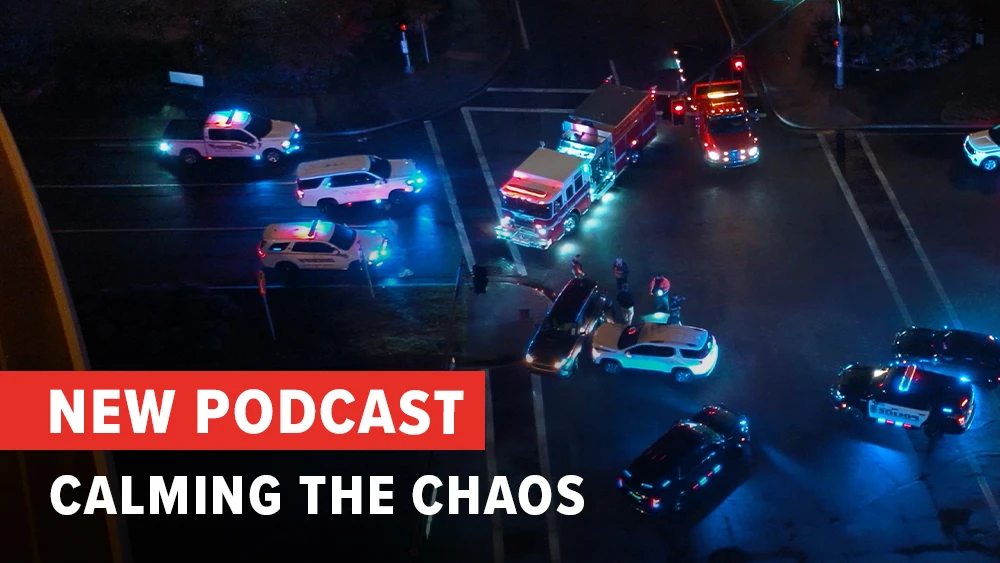
In this episode of the Fire Apparatus & Emergency Equipment Podcast, host Chris McLoon sits down with Derek Zeremba of Whelen Engineering to break down how scene lighting and warning lighting work together to improve safety on emergency scenes.
From nighttime visibility challenges to dynamic lighting control and real-world spec’ing considerations, this conversation explores how the right lighting strategy can reduce confusion, improve awareness, and ultimately help protect first responders and the public.
Watch the full episode to learn how smarter lighting creates safer scenes.
Click below to listen in!
Key Moments
0:09 – Introduction to scene and warning lighting
1:41 – Biggest visibility challenges on scene
2:51 – Why reducing intensity improves safety
3:12 – The importance of scene lighting strategy4:14 – Why ground lighting is critical5:56 – What is DVI™ (Dynamic Variable Intensity™)?7:09 – How DVI improves firefighter visibility
8:53 – Understanding day vs. night mode10:17 – Best practice: four-mode lighting setup10:33 – Who can program lighting systems?11:49 – How lighting directly impacts safety13:31 – Creating a calmer, safer scene
14:33 – What to consider when spec’ing lighting15:29 – Why warranty and longevity matter16:51 – How to learn more and evaluate lighting
Transcript
Chris McLoone: Hi, Chris McLoone here with Fire Apparatus & Emergency Equipment. Welcome to this episode of our podcast. Today, we’re talking about scene lighting and warning lighting - and how both play a role in keeping emergency scenes safe.
Joining me is Derek Zeremba, Fire and EMS Account Manager with Whelen. We’re going to break this topic down and talk about how lighting has evolved - and how departments can make better decisions when it comes to spec’ing their apparatus.
Derek, thanks for joining me.
Derek Zeremba: Thanks for having me. I’m glad to be here.
Chris McLoone: Let’s start broad. When we talk about scene safety, where does lighting fit into that conversation?
Derek Zeremba: Lighting is a huge part of scene safety. It’s not just about being able to see - it’s about being seen, and doing both in a way that doesn’t create confusion.
During the day, you’re competing with sunlight. At night, it becomes even more challenging because now your lighting can either help or hurt visibility depending on how it’s used.
Chris McLoone: What are some of the biggest challenges departments face when it comes to visibility?
Derek Zeremba: At night, especially, high-intensity lighting and fast flash patterns can overwhelm drivers. Add in weather conditions like rain or fog, and it gets worse.
You also have to consider that not everyone sees the same - older drivers, for example, may have a harder time processing all that visual information.
So if your lighting is too aggressive, it can actually create a hazardous situation instead of improving safety.
Chris McLoone: That seems a little counterintuitive - more light isn’t always better.
Derek Zeremba: Exactly. There’s a balance. By reducing intensity and slowing down flash patterns, you can create a calmer scene that’s easier for drivers to understand and navigate.
Chris McLoone: Let’s talk about scene lighting specifically. What should departments be thinking about?
Derek Zeremba: A lot of times, departments focus on lighting the distance - what’s out in front of them. But they forget about the immediate area around the truck.
That’s where firefighters are actually working. You’ve got tools, hoses, equipment - lots of trip hazards.
So having proper ground lighting all the way around the apparatus is critical.
Chris McLoone: That makes sense. It’s not just about visibility - it’s about operational safety.
Derek Zeremba: Exactly. If you can’t see where you’re stepping, that’s a problem.
Chris McLoone: One of the technologies that comes up in this conversation is DVI - Dynamic Variable Intensity. Can you explain what that is?
Derek Zeremba: DVI is designed to reduce visual noise. Instead of harsh, rapid flash patterns, it uses smoother transitions - more of a wave pattern - and adjusts intensity based on conditions.
The goal is to maintain visibility without overwhelming the scene.
Chris McLoone: How does that impact firefighters on scene?
Derek Zeremba: It actually helps a lot. High-intensity lighting can wash out reflective striping on turnout gear, making it harder to see personnel.
With DVI, you still get the visibility you need, but without that washout effect.
Chris McLoone: Let’s shift to day versus night operations. How should lighting differ?
Derek Zeremba: During the day, you need maximum intensity and more aggressive flash patterns to cut through sunlight.
At night, you want to dial that back - reduce intensity, slow things down, and create a more controlled environment.
Chris McLoone: Are departments starting to build that into their setups?
Derek Zeremba: Yes, and one best practice we’re seeing is using four modes: day response, day blocking, night response, and night blocking.
That gives departments flexibility based on both time of day and what the vehicle is doing.
Chris McLoone: What about programming these systems? Is that something departments can manage?
Derek Zeremba: Absolutely. These systems are very customizable. Departments can work with manufacturers or reps to set things up, and once it’s configured, it’s easy to use.
Chris McLoone: Can you talk about how lighting decisions impact safety in real-world scenarios?
Derek Zeremba: Sure. Think about a scene with poor lighting - you might not see a hazard like a downed power line or equipment on the ground.
Or drivers approaching the scene may not understand how to navigate around it.
Better lighting - used the right way - helps prevent those situations.
Chris McLoone: So it’s not just about visibility - it’s about awareness.
Derek Zeremba: Exactly. And when you create a calmer scene, everyone benefits - firefighters and the public.
Chris McLoone: Let’s talk about spec’ing. What should departments consider when choosing lighting?
Derek Zeremba: Budget is always a factor, but it shouldn’t be the only factor. You also want to think about performance, flexibility, and long-term value.
Chris McLoone: And these trucks are in service for a long time.
Derek Zeremba: Exactly. That’s why warranty and durability matter. You’re making an investment that needs to last.
Chris McLoone: For departments that want to learn more, what’s the best approach?
Derek Zeremba: Get a demo. Talk to your reps. See the technology in action.
It’s one thing to hear about it—but once you see it, it really clicks.
Chris McLoone: That’s great advice. Derek, thanks for joining me.
Derek Zeremba: Thanks for having me.
Chris McLoone: And thanks to everyone for listening. Be sure to check out more episodes on our website - and stay safe.
Smarter Lighting, Safer Scenes
Lighting technology continues to evolve - but the goal remains the same: protect responders and the communities they serve.
What this conversation highlights is a simple but important shift: more light isn’t always better. The real advantage comes from control - adjusting intensity, pattern, and placement based on the situation.
For departments planning their next apparatus, the takeaway is clear: Think beyond brightness. Think about how light behaves - and how it protects.
Because safer scenes start with smarter lighting.