
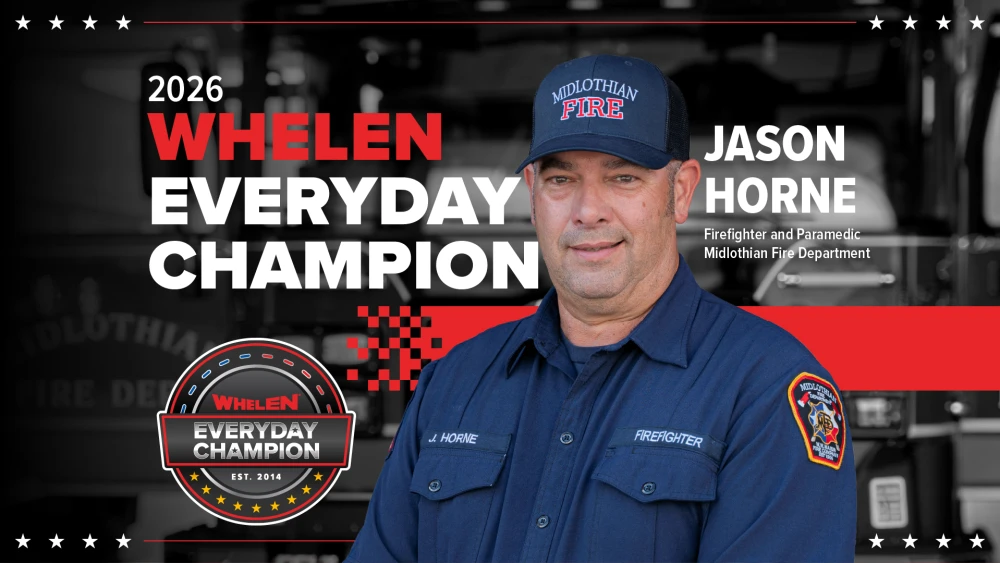
Some people might spend a lifetime hoping they would know what to do in an emergency. Jason Horne has spent 25 years preparing for that moment.
A firefighter and paramedic with the Midlothian Fire Department in Texas, Jason has built his career around helping people through some of the worst moments of their lives. At home, he teaches his four children the same principle that guides his work: “We help those who can’t help themselves.”
It’s a philosophy Jason considers simple. But on July 4, 2026, when three children became trapped beneath an overturned boat on a North Texas lake, living by those words meant plunging into the water, searching beneath the wreckage, and fighting to bring the children back.
Jason helped rescue all three, performing lifesaving care on two who were not breathing. All three survived.
Despite the extraordinary outcome, Jason is reluctant to call himself a hero. He believes he did what anyone should do when another person needs help. Those who know his story can see something more: a lifetime of service, a willingness to act, and a deep sense of responsibility for the people around him.
Now recognized as Whelen’s 2026 Everyday Champion, Jason hopes the story will inspire others to look out for one another - and to understand that sometimes, the right person at the right time can change everything.
A Calling Built on Service
Jason didn’t grow up in a family of first responders or follow a lifelong plan to become a firefighter. His path into the profession developed over time, beginning when he settled into a community with a volunteer fire department and decided to get involved.
He started learning the fundamentals of firefighting, then pursued emergency medical training. Before long, he had earned his EMT certification, begun riding on ambulances, and continued his education through paramedic school and the fire academy. What began as an opportunity to serve his community became a career spanning over two decades.
Today, Jason works as both a firefighter and paramedic, and he helps train the next generation of emergency responders. His understanding of the job has evolved with experience. The excitement and unpredictability of emergency response once held much of its appeal. Over time, that gave way to a deeper appreciation for the responsibility behind the work.
“I don’t ever want anybody to be hurt or injured. I don’t want anyone’s property to burn,” Jason says. “But I want to be there to help when the worst happens.”
The same commitment shapes his life outside the firehouse. Jason and his wife, Brandie, are raising four children and spend much of their time together outdoors. The North Texas lake where the rescue took place has been part of Jason’s family history for generations. He has spent nearly his entire life there, making it a familiar setting for boating, summer gatherings, and Fourth of July traditions.
The Choice to Act
On the evening of July 4, 2026, Jason and his family were preparing for their annual tradition of watching the fireworks from the boat. As evening approached, his 12-year-old daughter, Emilie, wanted to return to shore to spend time with visiting cousins. Jason agreed to take her to the boat ramp before heading back out.
On the way, he noticed people on a pontoon boat waving and shouting for help. As he approached, he learned that children were trapped beneath an overturned boat.
Jason immediately removed his hat and glasses and turned to Emilie.
“Do not get out of this boat. Don’t go with anybody. You sit right here, and you don’t move.”
Emilie didn’t hesitate to call 911 as her father entered the water.
Jason dove beneath the overturned boat, reaching into the space below to search for the children. He found a life jacket and pulled a young boy free. The child was conscious and breathing.
After getting the boy into someone’s care, Jason caught his breath and went back under. He found a young girl and brought her out.
She wasn’t breathing.
Jason got her to the top of the capsized boat and began rescue breathing and chest compressions. He continued working until she began breathing again.
But another child was still missing.
Exhausted, Jason returned to the water. He searched beneath the overturned boat, finding an empty life jacket but not the child he was looking for. Then the missing boy’s uncle located him beneath the boat, where he had become tangled in ropes, and pulled him free. The child, Junior, was blue, unresponsive, and not breathing. Jason later learned he had been submerged for more than 10 minutes.
Jason began rescue breathing and chest compressions again as they hurried toward shore. He continued providing care until they reached the boat ramp, where law enforcement officers and emergency medical responders were arriving. He helped communicate the children’s conditions so the responding crews could prioritize treatment. Two children were transported by ambulance. Junior was flown to a pediatric hospital for treatment and evaluation for complications related to oxygen deprivation.
For Jason, there was little room to think about anything beyond finding the children and getting them out. “The only thought that I really had was, this has to be fast. And I have to find them,” he recalls. “That’s it. That’s the only option there was.”
Even now, he resists the attention his actions have brought. “I did what anybody would have done,” he says. “It’s the right thing to do.”
The Best Outcome
In the months since the rescue, Jason has remained connected with Junior and his family. The boy recovered and returned to the everyday milestones of childhood, including starting kindergarten. For Jason, seeing him thrive has become one of the most meaningful parts of the experience. Junior’s family sends Jason videos from school and pictures of his latest adventures. At a local football game, Jason was invited to serve as an honorary captain, and Junior and Emilie walked onto the field with him. When Junior sees Jason, he runs to him for a hug and often wants to be held for several minutes. His mother has told Jason that Junior points to a picture of the two of them and says, “That’s Jason, he’s my best friend, he saved me.” For Jason, watching Junior grow, play, and enjoy life has made the outcome of that July evening all the more meaningful. “Just getting to see him be a little kid and, you know, just be normal and do his thing is super rewarding,” Jason says.
Jason is equally proud of Emilie. At just 12 years old, she found herself in the middle of a frightening emergency. She called 911 and followed her father’s instructions while he worked to save the children. Her response was an important part of the effort, and Jason’s concern for her experience is a reminder that the rescue affected more than the children in the water. It affected the families and first responders who lived through those moments, too.
When Jason reached shore, familiar faces from neighboring fire departments were there to help. Their presence reinforced a lesson he knows from years in emergency services: even when one person takes the first step, no one has to carry the responsibility alone.
Caring for Those Who Care for Others
The children survived, but the emotional impact of the rescue didn’t end when the immediate danger passed. Jason initially returned to work, believing he had processed what happened. In time, he realized he needed additional support and sought counseling to work through the experience. A conversation with his battalion chief helped him understand that a positive outcome doesn’t erase the trauma of witnessing a life-threatening event. The children were safe, but Jason had still experienced something unlike anything he had encountered in 25 years of emergency response. He is very open about mental health support for first responders, hoping his experience will encourage others to seek help when they need it.
“I think the heroes need more than the average person,” he says.
Firefighters and paramedics train to stay focused during a crisis and keep moving when others need them. But being able to act under pressure doesn’t mean they are immune to the emotional weight of what they experience.
For Jason, caring for others must include caring for yourself and the people beside you. Talking about difficult experiences, leaning on trusted colleagues, and seeking professional support are all part of being able to continue serving. That same concern for others informs Jason’s role as a mentor. Throughout his career, he has learned from colleagues who helped him grow into the firefighter and paramedic he is today. Now he passes that knowledge along to those entering the profession. His advice is grounded in preparation, teamwork, and looking after the people who depend on you.
“You gotta take care of yourself first, because if you don’t make it there, you can’t help anybody. Take care of yourself, take care of your partner, take care of your crew.”
It’s a lesson that extends well beyond emergency services. The people who help others need support, too, and asking for it is not a failure of strength.
Prepared to Make a Difference
The rescue also reinforced Jason’s commitment to water safety. He encourages families to learn how to swim, understand the risks of being on the water, and make sure children wear properly fitted life jackets. All three children in the July 4 incident were wearing life jackets, which Jason believes is the only reason he was able to locate them beneath the overturned boat.
His advice to families is straightforward:
- Prepare before you go: Understand the risks of being on the water and make safety part of every outing.
- Wear life jackets: Make sure children have properly fitted life jackets, even when the water seems calm, and the outing feels routine.
- Know when to call for help: Not every emergency can be handled safely by a bystander. Calling 911 and following the instructions of emergency responders can make a critical difference.
Jason doesn’t expect everyone to have the training or ability to perform a rescue. He knows that helping can take many forms. Sometimes it means entering the water; sometimes it means calling for help, following instructions, or supporting the people who are responding. What matters is being prepared to do what you safely can when someone needs help.
“We’re all in this together, whether we like it or not,” Jason says. “And we’ve got to take care of each other.”
The Right Person at the Right Time
Being named Whelen’s 2026 Everyday Champion is an honor Jason appreciates, even if recognition has never been his motivation. He sees the rescue as an extension of the work he has done throughout his career: staying prepared, trusting his training, and helping when someone needs him. He hopes sharing his experience will encourage others to make safer choices, support the mental health of first responders, and consider how they can contribute to their own communities.
Jason is quick to downplay what he did that Fourth of July. To him, seeing people in danger and stepping in to help wasn’t a heroic choice. It was simply the right thing to do. But the ability to act when every second counts doesn’t happen by accident. It is built over years of training, service, and a commitment to being there when others need help most. When three children were trapped beneath an overturned boat, Jason brought all of that experience to a moment that would change several lives forever. He may not think what he did was extraordinary. But for three children and their families, his decision to steer his boat toward a crisis made all the difference.
Jason Horne was the right person at the right time - not simply because he happened to be there, but because a lifetime of service had prepared him to act when it mattered most.
Whelen is proud to recognize Jason for the lives he helped save and for the lifelong commitment to service that prepared him for that moment. Jason will be honored at the NASCAR Hall of Fame in Charlotte, North Carolina, joining past honorees in the Whelen Hall of Champions.
His story is a reminder that we may never know when someone will need us most.
What matters is how we choose to respond when that moment comes.