
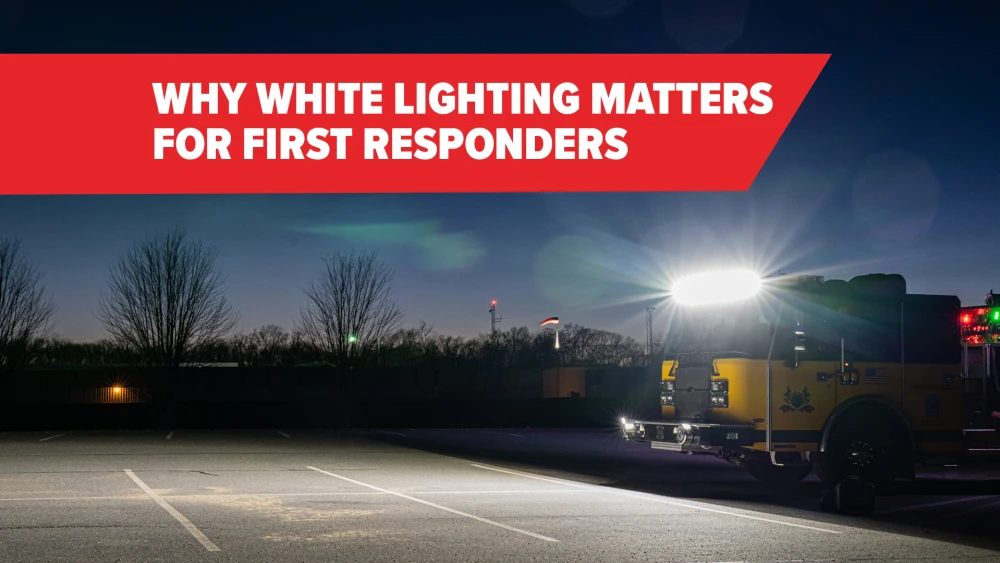
When every second matters, white emergency lighting plays an important role in helping first responders work safely and efficiently. From roadside incidents and traffic stops to fire scenes and other emergencies, white light helps responders see people, vehicles, equipment, and potential hazards in low-light conditions. Properly designed emergency scene lighting also helps improve visibility for motorists and others approaching the scene.
But effective white lighting is about more than brightness. It requires the right beam pattern, thoughtful placement, dependable performance, and a design built around the demands of emergency response.
White emergency lighting helps illuminate the areas where first responders work, but simply maximizing light output isn’t always the answer. The goal is to deliver useful illumination where it’s needed without creating unnecessary glare or wasting light.
“Rather than evaluating a product only by its total lumen output, we focus on controlling where that light is distributed,” says Jon Sestrom, Product Manager at Whelen Engineering. “Different applications may require a focused beam for a specific work area or a wider pattern for perimeter or scene illumination.”
This distinction matters when selecting emergency vehicle lighting. Perimeter lighting helps improve visibility around the apparatus and nearby walking paths, while scene lighting illuminates a larger work area. Takedown and alley lights serve more specific needs around the vehicle. Matching the lighting product and its optics to the task helps responders get the illumination they need while limiting unnecessary spill light and glare.
Power consumption is another important consideration. Emergency vehicles often support warning lights, radios, pumps, controls, and other electrical equipment. White lighting must provide effective illumination while working within the vehicle’s available electrical capacity.
Emergency scenes are unpredictable, and lighting needs vary depending on the vehicle, environment, and task. That’s why firsthand experience matters when developing emergency lighting solutions.
At Whelen, employees with experience as firefighters, law enforcement officers, EMTs, and other first responders bring valuable perspectives to product development. Their feedback helps inform how lighting is mounted, where illumination is needed, and what challenges responders face in day-to-day operations.
“We regularly talk with first responders about where products are mounted, how they are used on scene, and what challenges they encounter,” Sestrom explains. “That feedback helps us translate real-world use cases into product requirements.”
This practical insight helps guide decisions about optics, mounting options, and functionality, ensuring product development reflects the realities of emergency response rather than relying on specifications alone.
Emergency lighting must also withstand demanding conditions, including vibration, moisture, temperature extremes, road contaminants, and repeated use. Designing for long-term reliability helps ensure lighting is ready to perform when responders depend on it.
For emergency fleets and agencies, dependable equipment starts long before a product reaches a vehicle. How a lighting solution is designed, manufactured, and tested can all contribute to its quality and reliability.
As an American manufacturer with nearly one million square feet of manufacturing space across facilities in Connecticut and New Hampshire, Whelen takes a vertically integrated approach to production. Greater control over engineering, manufacturing, testing, and key aspects of the supply chain helps ensure consistent quality and foster close collaboration throughout the product development process.
Manufacturing in America also gives Whelen greater visibility into production and supply chain operations. For emergency services, where equipment availability and dependable performance are essential, this level of control supports a long-term commitment to serving first responders and the fleets that support them.
By keeping engineering and manufacturing closely connected, Whelen can continue developing emergency vehicle lighting solutions informed by real-world needs and backed by American manufacturing expertise.
Choosing white emergency lighting means looking beyond brightness alone. Agencies should consider the task, beam pattern, power requirements, and the product’s ability to perform reliably in demanding conditions.
Whelen combines engineering expertise, firsthand input from first responders, and vertically integrated American manufacturing to develop lighting solutions designed for the realities of emergency response.
From scene and flood lighting to takedown and alley lights, our focus remains on delivering purposeful illumination that helps first responders see clearly, work safely, and protect the people around them.
Choosing the right white lighting means looking beyond brightness to consider scene safety, real-world performance, and long-term reliability. With firsthand first responder insight, engineering expertise, and vertically integrated American manufacturing, Whelen develops lighting solutions designed to meet the demands of emergency response.
Manufactured in America. Trusted to Protect First Responders.