
At Whelen, we utilize an industry-first process to counteract the effects of environmental and chemical damages to our lenses and domes. We hard-coat as many as 35,000 lenses every 24 hours in our New Hampshire facility! It takes just 15 minutes for a lens to make it through the entire process.

Why we do it
Our products feature UV resistant polycarbonate lenses, but we hard-coat for added durability and reliability. Raw, injection-molded plastic begins to degrade when exposed to the environment immediately. Our hard-coating increases the visual life of the light to 7-10 years, providing UV and scratch resistance from sand, salt, sun, and road chemicals.
How we do it
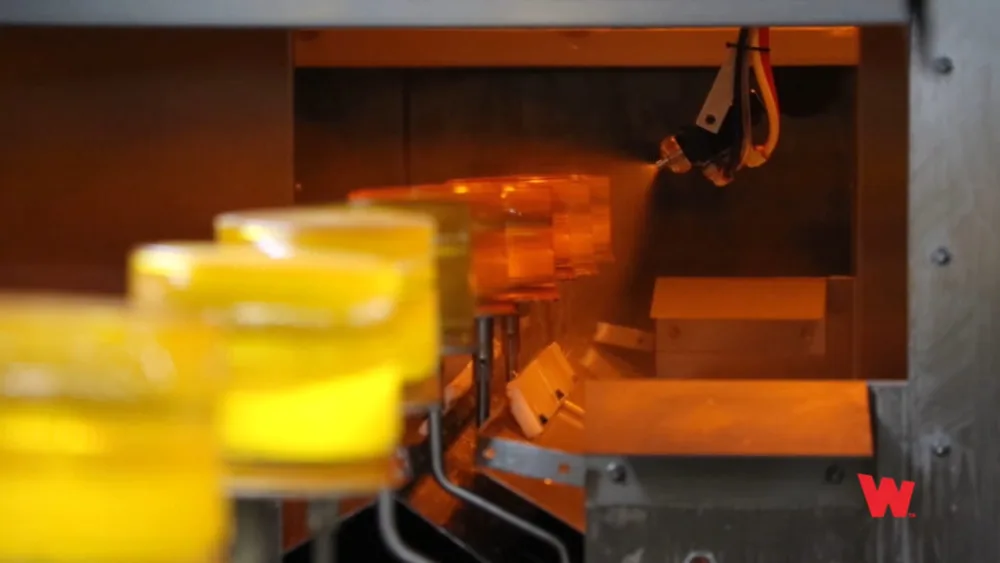
- We begin by placing raw lenses and domes, composed of UV resistant polycarbonate, onto custom fixtures in the loading area.
- In the cleaning station, the lenses are washed with isopropyl alcohol to clean their surface and remove any debris.
- The lenses then move into the spray off area to remove any static charge from their surface.
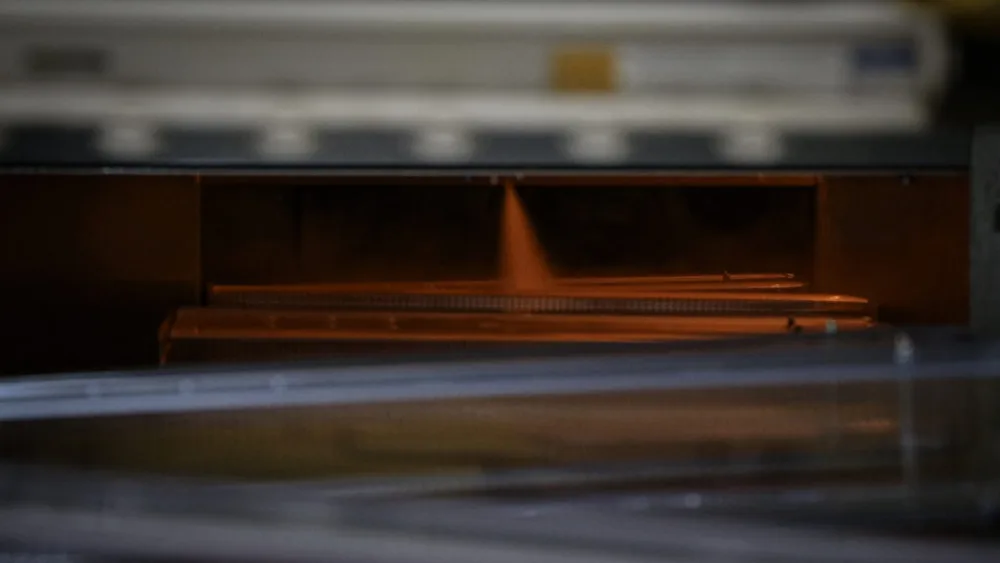
- Next, our six-axis robot uses an atomizing spray gun to apply the actual hard-coat in a clean, stainless steel environment. It’s completely free from outside contaminants.
- Then, the infrared heating oven heats the lenses to 160°F, breaking the chemical bond and infusing the hard-coat into the lenses.
- The lenses move to the UV lamp oven, which utilizes 20 high-intensity UV lamps to solidify the hard-coat.
- Next, the lenses arrive in the unloading area, where a spectrometer measures the thickness of the hard-coat. Finally, the lenses are inspected and sorted by our team.
FAQ
- What is hard coating on emergency vehicle light lenses?
Hard coating is a protective treatment applied to polycarbonate light lenses to improve resistance to UV exposure, scratches, chemicals, salt, sand, and other environmental conditions. - Why are Whelen lenses hard-coated?
Whelen hard-coats its emergency vehicle light lenses to improve durability, protect against environmental and chemical damage, and help maintain lens clarity and performance over time. - How does Whelen’s hard-coating process work?
Whelen’s hard-coating process uses a robotic spray system to apply a protective coating to polycarbonate lenses, followed by heating and UV curing. Each lens is then measured and inspected to ensure consistent coating quality.


